 MarkMyAss
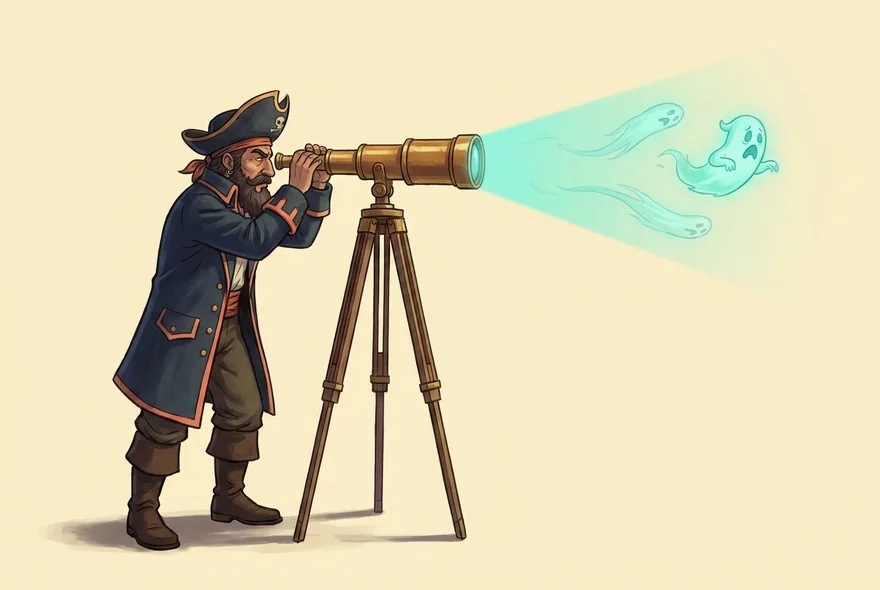
Spot the ghost before it stows away.
Claude Watermark Detector#
What "checking for a Claude watermark" can and can't actually tell you#
This page is about detection, not cleaning. If you have a file or piece of text and want to know what MarkMyAss can genuinely check for it — and what a "not found" result does and doesn't prove — read this before you trust any tool's answer, including MarkMyAss's.
What MarkMyAss tests#
Running ghostmark inspect or ghostmark inspect-text checks for four
independent, named signals — never a single blended "AI score":
- Hidden Unicode characters — deterministic, rule-based scan.
- File metadata (EXIF/XMP/IPTC/PDF DocInfo) — deterministic, and cross-checked against ExifTool if installed.
- C2PA / Content Credentials container — structural JUMBF-marker scan, cross-checked against c2patool if installed.
- Statistical model-level text watermark — reported explicitly as
UNKNOWN, because no public detector exists (see below).
Each signal gets its own row: FOUND, NOT FOUND, or UNKNOWN. There
is no combined percentage, because a combined percentage would have to
average a real measurement with a guess.
What "NOT FOUND" means (and doesn't mean)#
NOT FOUND for hidden Unicode or file metadata means MarkMyAss's
detector actually ran its checks against the content and found none of
the specific patterns it looks for. It is a real, reproducible result —
run it again and you'll get the same answer, because the detection rules
are public and deterministic (not a black-box model).
NOT FOUND does not mean:
- "This text is definitely human-written." MarkMyAss checks for specific technical signals, not authorship in general.
- "This text has no statistical watermark." MarkMyAss has no way to
check that signal at all right now — see below — so it never reports
NOT FOUNDfor it. It reportsUNKNOWN. - "No AI provider anywhere embeds anything undetected by MarkMyAss." MarkMyAss only implements the specific mechanisms listed above.
What MarkMyAss does NOT prove#
The single most important limitation: MarkMyAss cannot tell you whether text was generated by Claude specifically, because Anthropic has not published a public, independently runnable detector for its statistical text watermark. Anthropic's own August 2026 announcement confirms the mechanism exists but states detection tooling is "forthcoming" — see Anthropic Help Center and the full writeup at /lab/claude-watermark.
Any tool online claiming to detect "the Claude watermark" today is
either checking a different, unrelated signal (hidden Unicode,
formatting quirks, writing-style heuristics) and mislabeling it, or
producing an unverifiable guess. MarkMyAss's own inspect output makes
this distinction explicit rather than hiding it in fine print.
Supported vs. unsupported signal types#
| Signal type | Detectable by MarkMyAss today | Why |
|---|---|---|
| Hidden Unicode | Yes | Public, static classification rules |
| File/image/PDF metadata | Yes | Standard, documented formats (EXIF/XMP/IPTC/PDF) |
| C2PA container presence | Partial | Structural marker scan; not signature validation |
| Statistical text watermark | No | No public detection methodology exists yet |
FAQ#
Can I detect if a specific piece of text came from Claude? Not with certainty, using any publicly available tool as of this writing — MarkMyAss included. What you can check: whether it contains hidden Unicode, or (for files) embedded metadata that might indicate its origin.
Why doesn't MarkMyAss just estimate a probability? Because there's nothing to base an honest probability on. A provider's private statistical watermark is only checkable by the provider holding the detection key. Anything calling itself a "Claude detection score" today is not measuring what it claims to measure.
Does a clean detection result mean I can safely claim something is human-written? No. MarkMyAss reports what its named detectors found or didn't find — that's a narrower, more honest claim than "this is/isn't AI-generated."
Check a file or text → Run the inspector